/Is Balloon Manufacturing a Profitable Business in 2026?
Is Balloon Manufacturing a Profitable Business in 2026?
Jul 17, 2026
If you've been watching the party supplies market lately, you already know the numbers are moving in the right direction. Global demand for latex balloons—especially in the events, promotions, and kids' party segments—has stayed surprisingly resilient, and 2026 is shaping up to be a decent year for new entrants. Raw latex prices have stabilized compared to the wild swings of the past two years, sea freight has cooled, and end-market pricing in Europe, North America, and the Middle East still carries healthy margins for branded or customized balloons. The real question isn't whether people are buying balloons—they are—but whether setting up your own plant makes more sense than continuing to wholesale from someone else's factory.
The economics actually stack up if you run the numbers honestly. A small-to-mid-scale setup with a capable latex balloon machine can produce 30,000–80,000 pcs/hour depending on mold count and balloon size, and the raw material cost per balloon is tiny.
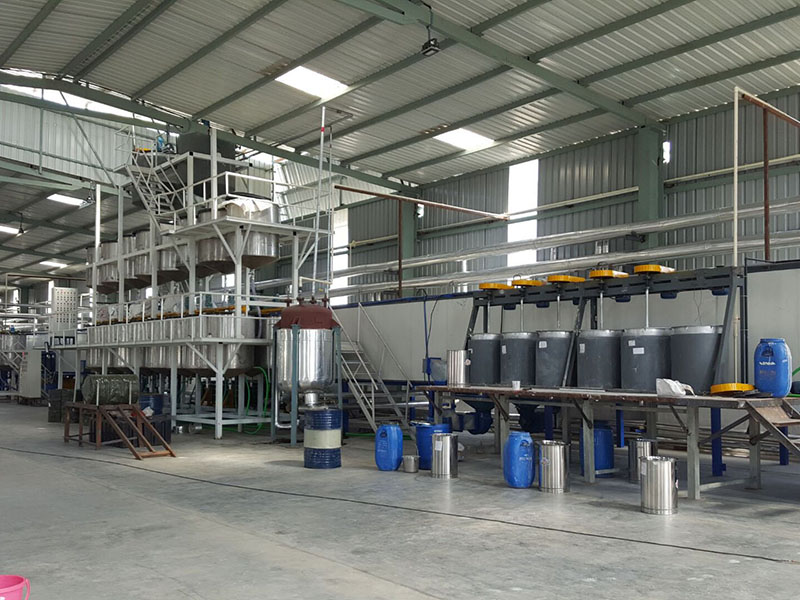
Where most newcomers lose money isn't the market—it's the equipment decision. A cheap line that can't hold dipping consistency will burn your margin in scrap alone, and downtime on a balloon line is expensive because latex starts curing in the tank if you stop too long. This is why experienced buyers tend to spec a proper latex balloon production line rather than the entry-level retrofit kits some traders push. You want stable conveyor speed, zoned curing, and mold compatibility so you can swap between 3-inch, 9-inch, and heart shapes without re-engineering the whole line. Anhui Tianyuan has been building exactly this kind of in-house integrated line for years, and we've seen plenty of buyers who tried the bargain route first and came back to reconfigure six months later—usually at a higher total cost.
Another angle worth mentioning for 2026: regional supply gaps. In parts of Southeast Asia, East Africa, and Latin America, local balloon supply is still patchy, which means importers there are paying a premium to bring stock in from China or Thailand. If you're in one of those regions, local manufacturing isn't just a cost play—it's a logistics play. You cut lead time from 30–45 days to 2–3 days, you control print customization for local festivals and political campaigns, and you're not sitting on containers of unsold inventory waiting for a ship. That arbitrage is where the real profit sits this year.
So is it profitable? Yes, if you treat it like a production business and not a trading side project. Pick the right latex balloon making machine, match your output to a realistic local or export channel, and don't underprice yourself chasing volume on plain rounds. The market's there—2026 just favors the operators who can deliver consistent quality and fast turnaround more than the ones who can quote the lowest ex-works price. If you're weighing a setup and want to talk throughput, mold configs, or what a Tianyuan line looks like in a 1,500 sqm workshop.
Discover a range of high-performance balloon production machines meticulously engineered to meet the diverse needs of our clients. From balloon printing and shaping to efficient inflation and packaging, our machinery is designed to enhance production efficiency and product quality.
Experience the future of balloon assembly with our advanced production lines. Our assembly lines are crafted to optimize your production, ensuring seamless operation, increased output, and consistent balloon quality. With customizable features and precision engineering, we offer solutions tailored to your specific requirements.